We have noticed that the modern executive is often trapped in a cycle of "High-Functioning Dissociation." Most leadership development focuses on the intellect, yet the most critical decisions are filtered through the autonomic nervous system before they ever reach the conscious mind.
At The Embodied Leadership Library, we define leadership not by your title, but by your capacity to remain regulated while those around you are dysregulated. When a leader loses access to their nervous system's "Ventral Vagal" state, they slip into Survival Cognition. In this state, empathy disappears, vision narrows, and strategy is replaced by a desperate need to "fix" or "fight."
To lead with true authority, you must first master the biological terrain of your own safety. These seven books provide the scientific and somatic infrastructure to do exactly that.
1. Anchored — Deb Dana
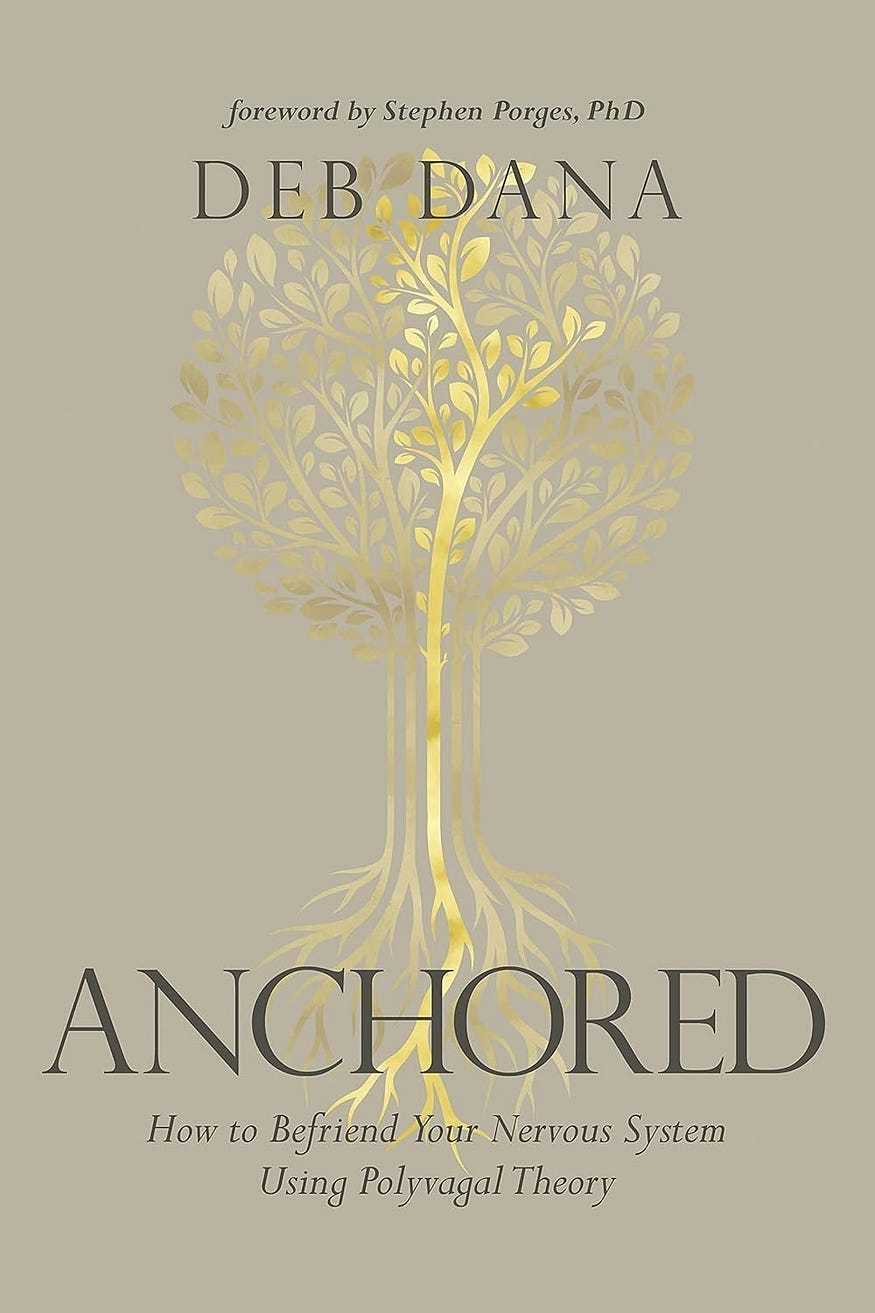
This book changes how you understand your internal weather. Dana translates complex Polyvagal Theory into a practical language for the everyday human. We consider this a foundational text because it introduces Ventral Vagal Anchoring—the ability to find a "home base" of safety even in a turbulent market.
We often see leaders who are "successful" but physically brittle. If you find yourself constantly scanning for what might go wrong, Anchored provides the tools to recognize your shift into a "Sympathetic" (fight/flight) state and offers micro-interventions to bring your system back online. It is the essential "How-To" for the science of human connection.
Who it is for: Leaders who feel "on edge" and want a scientific roadmap to return to calm, clear authority.
The Somatic Bridge: It teaches you to map your own hierarchy of states: Ventral (Safe), Sympathetic (Mobilized), and Dorsal (Shut down).
2. Conscio Under Pressure — Fristy Sato
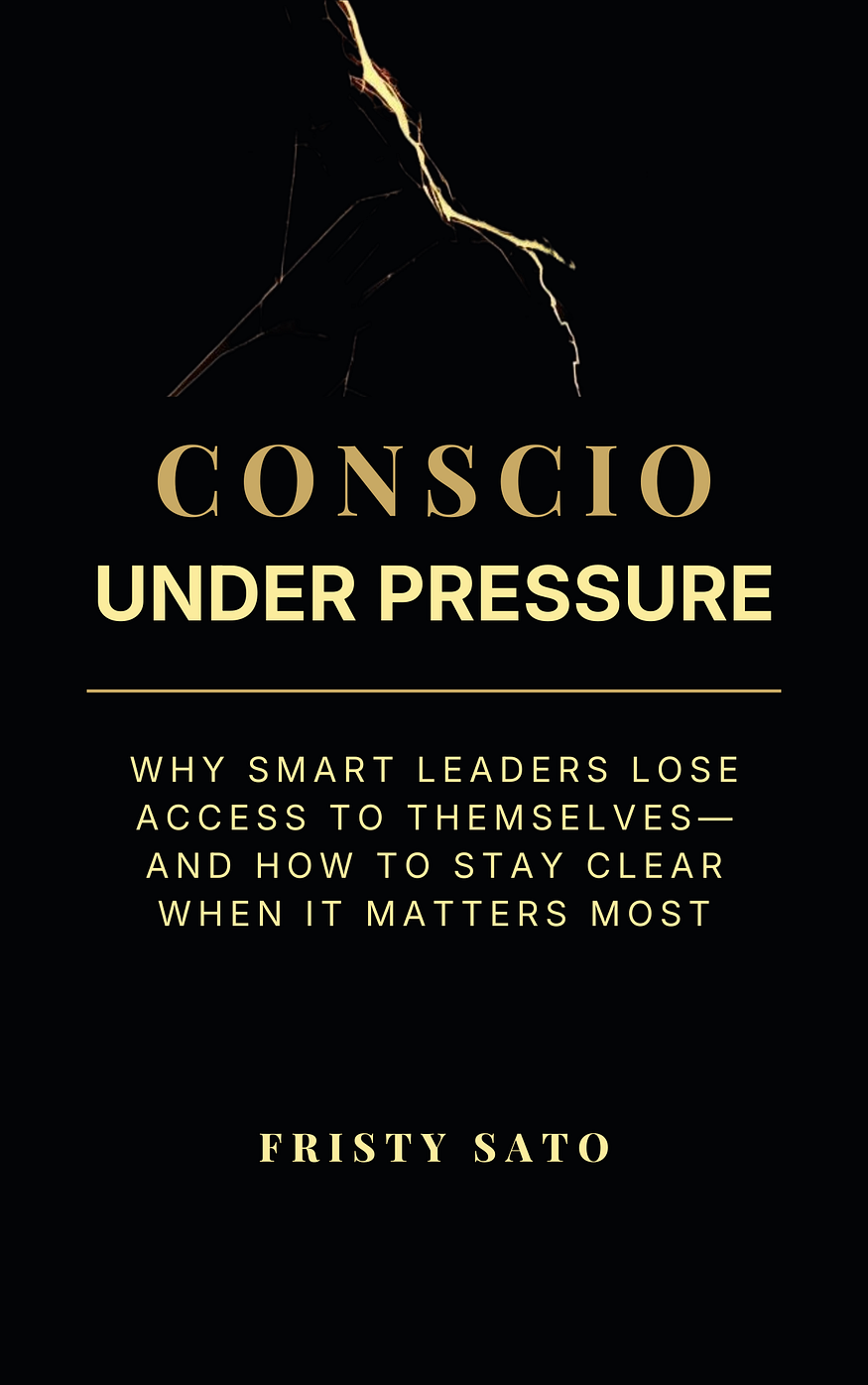
While many books discuss regulation in a therapeutic context, Sato applies it directly to the boardroom. This book identifies the Access Gap—the biological moment where stress causes your executive function to collapse into survival patterns.
This book is worth exploring because it validates the "Invisible Pressure" leaders feel. It explains that your reactivity isn't a character flaw; it's a physiological event. Sato provides a framework for staying "Coherent" under extreme velocity, ensuring that your decisions come from your wisdom rather than your wounding.
Who it is for: High-stakes founders and CEOs who need to maintain peak clarity during crisis or rapid scale.
Identity Trigger: "I want to be the leader who remains unshakeable when the stakes are highest."
3. Polyvagal Exercises for Safety and Connection — Deb Dana

If Anchored is the theory, this is the laboratory. We include this because many leaders understand regulation intellectually but lack the "somatic reps" to execute it in real-time.
This book provides specific, body-led exercises to tone the Vagus Nerve. We have noticed that leaders who engage in these "Biological Reps" have a much higher threshold for stress. They don't just "cope" with pressure; they have the capacity to hold it. It is a highly practical guide that turns your own physiology into a tool for leadership influence.
Who it is for: The practical leader who wants "drills" rather than just "theories" to change their state.
The Somatic Bridge: It offers direct interventions to move the body out of bracing and back into presence.
4. The Body Keeps the Score — Bessel van der Kolk

This is the most referenced book in the field of trauma and somatics for a reason. Van der Kolk reveals that the "Body is the Scorekeeper" for every stressor we have ever faced. For the leader, this means your current "Executive Presence" is often being dictated by past "Survival Wiring."
We often see high-performers who operate from a place of "Biological Urgency"—a constant feeling that they are behind or in danger. This book explains the "Neurobiology of Trauma" and why "talking" about your stress is never enough. It is a powerful, though heavy, read that will change how you view your team’s behavior and your own.
Who it is for: Leaders who want to understand the deep roots of their own—and their team’s—behavioral patterns.
Limitations: It can be triggering for some; we suggest reading it slowly and pairing it with Waking the Tiger.
5. Waking the Tiger — Peter A. Levine

Levine’s work focuses on the "Incomplete Stress Cycle." He explains that animals in the wild rarely suffer from trauma because they physically "shake off" the energy of a threat. Humans, especially leaders, tend to suppress this energy, leading to chronic dysregulation.
This book changes how you understand "Burnout." We have noticed that what most leaders call burnout is actually a system that has been "stuck in the "Sympathetic" or "Dorsal" state for too long. Levine teaches you how to gently release this trapped energy, restoring your "Biological Resilience."
Who it is for: The leader who feels "stuck" or "frozen" despite having every reason to move forward.
Lineage: The foundational text for Somatic Experiencing (SE).
6. My Grandmother's Hands — Resmaa Menakem

We include this to expand the definition of regulation to include "Cultural Somatics." Menakem argues that leadership is not just about individual regulation, but about understanding the "Hereditary Trauma" we all carry in our bodies.
For leaders managing diverse teams, this book is essential. It explains why certain "vibrations" or tensions exist in a room even when no one is speaking. It provides a path to "Somatic Abolitionism"—the work of healing the body so that we can lead from a place of true, unburdened humanity.
Who it is for: Leaders who are committed to building deeply inclusive, psychologically safe organizations.
The Somatic Bridge: It moves regulation from the individual "Bio-field" to the "Systemic Field."
7. Overflow — Fristy Sato

It may seem unconventional to include a book on "Money Healing" in a regulation list, but we have noticed that for most leaders, Wealth is the ultimate stressor. Scarcity is a nervous system state, not a bank balance.
Overflow explains the "Wealth Capacity Ceiling"—the point where your success actually starts to feel like a threat to your nervous system. If you find yourself sabotaging your growth or feeling a physical "weight" as your business scales, your nervous system is likely "bracing" against the expansion. This book provides the somatic update to help you receive and hold abundance without dysregulating.
Who it is for: Founders who have achieved success but feel their nervous system is "narrowing" rather than "expanding" with their wealth.
The Somatic Bridge: It identifies "Financial Bracing" as a nervous system response that blocks leadership flow.
The Stacking Effect: Building a Regulated System
To move from a state of "High-Alert" to "Calm Authority," we suggest stacking these titles to create a complete curriculum:
Map Your System: Start with Anchored to identify your primary states.
Practice the Shift: Use Polyvagal Exercises for Safety and Connection to build the "Vagal Tone" required to shift states quickly.
Lead Under Pressure: Apply Conscio Under Pressure to ensure your regulation holds when the stakes are high.
Leadership today requires more than just "thinking faster." It requires the capacity to stay in your body while the world demands you leave it.
Where to Start
If you are new to the world of nervous system regulation, we usually suggest beginning with Anchored by Deb Dana. It provides the most accessible entry point into the science of safety and will immediately change how you interpret your own reactions in meetings and at home.
For deeper study, this list is the best place to start: https://linktr.ee/embodiedleadershiplibrary